Professor Mushiri Urges Zimbabwe to Harness Youth and Coding for Rapid Technological Expansion
September 2, 2026 2026-09-02 13:18Professor Mushiri Urges Zimbabwe to Harness Youth and Coding for Rapid Technological Expansion

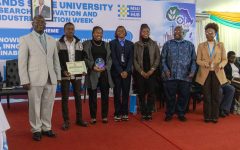
Midlands State University’s Faculty of Education hosted a public lecture in Gweru, Zimbabwe, on 01 September 2026, where Professor Tawanda Mushiri detailed how educators must accelerate national economic growth by building homegrown capacity in artificial intelligence, coding, and robotics.
The event operated under the official theme “Accelerating Zimbabwe’s Growth through AI, Coding and Robotics.”
The Deputy Dean of the Faculty of Education, Dr. S. Mashingaidze, opened the event on behalf of Executive Dean Dr. A. Moyo.
Dr. Mashingaidze stated that academic institutions possess a fundamental obligation to prepare students for a technology-driven global economy.
“As MSU, we believe it is our responsibility to not only prepare our students for this new world, but also to lead the conversation on how we can harness these powerful tools to build a prosperous and equitable future for Zimbabwe,” Dr. Mashingaidze said.
Delivering his public lecture, Professor Tawanda Mushiri, the Executive Director for Technical Services at the Scientific and Industrial Research and Development Centre, identified Zimbabwe’s youthful demographic as a critical resource for technological advancement.
He insisted that the integration of these emerging technologies must align directly with Vision 2030, the National Development Strategy 1 and 2, and the Heritage-Based Education 5.0 philosophy.
He demanded stronger software literacy across all academic disciplines to build authentic local capacity and eradicate national reliance on imported systems.
“A nation that codes builds its own tools instead of only buying licences from abroad,” he said.
Professor Mushiri established that the interconnected application of artificial intelligence, coding, and robotics creates massive opportunities for immediate industrialisation across education, agriculture, health care, and manufacturing.
Attendees subsequently engaged in a dynamic question-and-answer session covering technology ethics, workforce evolution, and Africa’s digital trajectory.
Dr. R. Guvhu, a lecturer in the Faculty of Education, delivered the closing remarks, commending Professor Mushiri for validating the immense value of multidisciplinary research.
“Your work across artificial intelligence, medical robotics, biomedical engineering, innovation management and national AI policy has helped us see the full journey from identifying a problem to designing a solution, protecting intellectual property, managing a project and connecting innovation with society,” Dr. Guvhu said.
This public lecture reinforced the University’s commitment to producing holistic graduates equipped with the precise technical skills required to contribute to Zimbabwe’s industrialisation, modernisation and economic development.