MSU Rallies Stakeholders to Unlock Green Jobs, Skills and Climate Finance in Zimbabwe
November 19, 2026 2026-11-19 7:40MSU Rallies Stakeholders to Unlock Green Jobs, Skills and Climate Finance in Zimbabwe
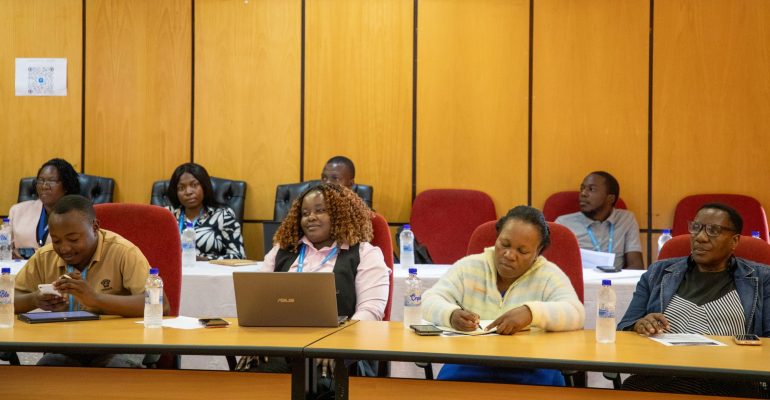
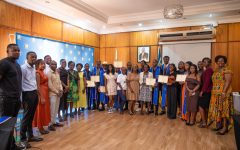
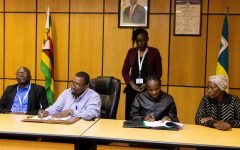
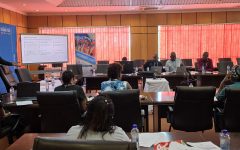
Midlands State University’s (MSU) Centre for Public Policy and Devolution convened stakeholders at the Gweru Main Campus on 18 November 2026 for a workshop on Advancing Green Jobs, Green Skills, and Climate Finance in Zimbabwe, aimed at turning policy commitments into job creation, enterprise growth, and climate-resilient livelihoods.
Representing the Executive Dean of the Faculty of Social Sciences, Professor T. Marambanyika, Dr. E. P. Mutema, Chairperson in the Department of Governance and Public Management, emphasised the importance of placing people and their livelihoods at the centre of this transition.
“The green transition demands technicians and entrepreneurs with new competencies, but equally social scientists who can interrogate inequality, institutional capacity, labour-market change and the distribution of benefits,” he said.
Joining virtually from Ireland, University of Galway, Multidisciplinary Researcher, Dr. T. Ncube, demonstrated how aligning green skills with resource efficiency and sustainable production builds decent work and an equitable transition.
Turning to enterprise development, Dr. P. Chadambuka, Senior Lecturer in the Department of Community Studies, highlighted green entrepreneurship and livelihood diversification as primary engines for Zimbabwe’s sustainable economic transformation.
“Moving towards a green economy requires us to embrace new ways of doing business and creating livelihoods while ensuring that economic growth does not come at the expense of the environment,” she noted.
Director of Local Government and Public Works in the Ministry of Local Government and Public Works, Mr. C. Murove, outlined the Government’s green-economy policies and programmes, calling on institutions to convert existing commitments into measurable community benefits.
He highlighted progress in advancing sustainable development and underscored the importance of translating policy commitments into tangible benefits for communities.
Following the presentations, participants discussed the social implications of the green transition, emphasising the need to protect workers and communities dependent on traditional industries while ensuring that its benefits extend to all sections of society.
Closing the workshop, Coordinator of the MSU Centre for Public Policy and Devolution, Dr. V. Chakunda, urged stakeholders to work collectively towards turning Zimbabwe’s green economy ambitions into tangible opportunities.
“As we journey towards the green economy, we must recognise that the transition presents opportunities for green employment, skills development, innovation and resilient livelihoods,” he said.
The workshop reaffirmed MSU’s contribution to Zimbabwe’s industrialisation and economic modernisation through research, knowledge generation and policy engagement, while strengthening strategic partnerships to advance innovative, inclusive and sustainable solutions for the country’s green economy.